About me
I'm Eric Gyabeng Fuakye, a graduate researcher in Biomedical Engineering (Quantum Computing for Machine Learning specialization) at the University of Saskatchewan. With a physics background and research experience at Concordia University, the University of Regina, and CERN, I combine data analysis, programming, and computational modeling expertise with a focus on quantum machine learning applications in biomedical systems. My research interests include quantum algorithms, health informatics, and quantum-enabled biomedical innovations.
Current Research
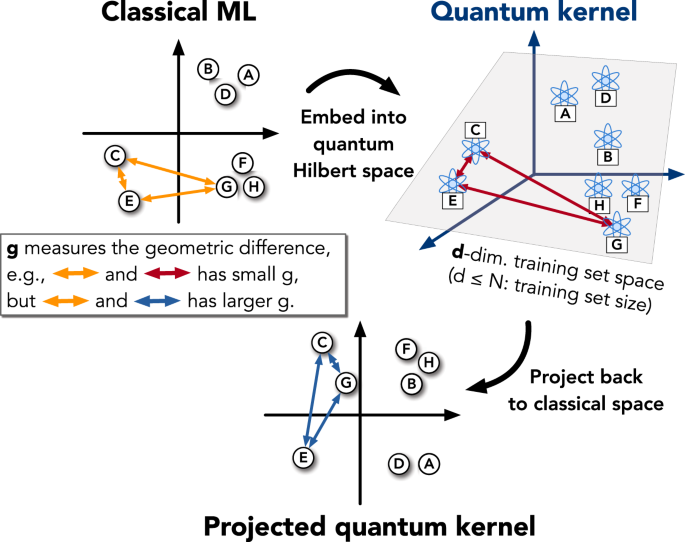
1. Quantum algorithms for learning from data
This work looks at how quantum computers might help with everyday tasks such as sorting data into groups or making predictions from examples. The goal is to compare simple quantum approaches with standard machine‑learning methods and see when they offer any advantage.
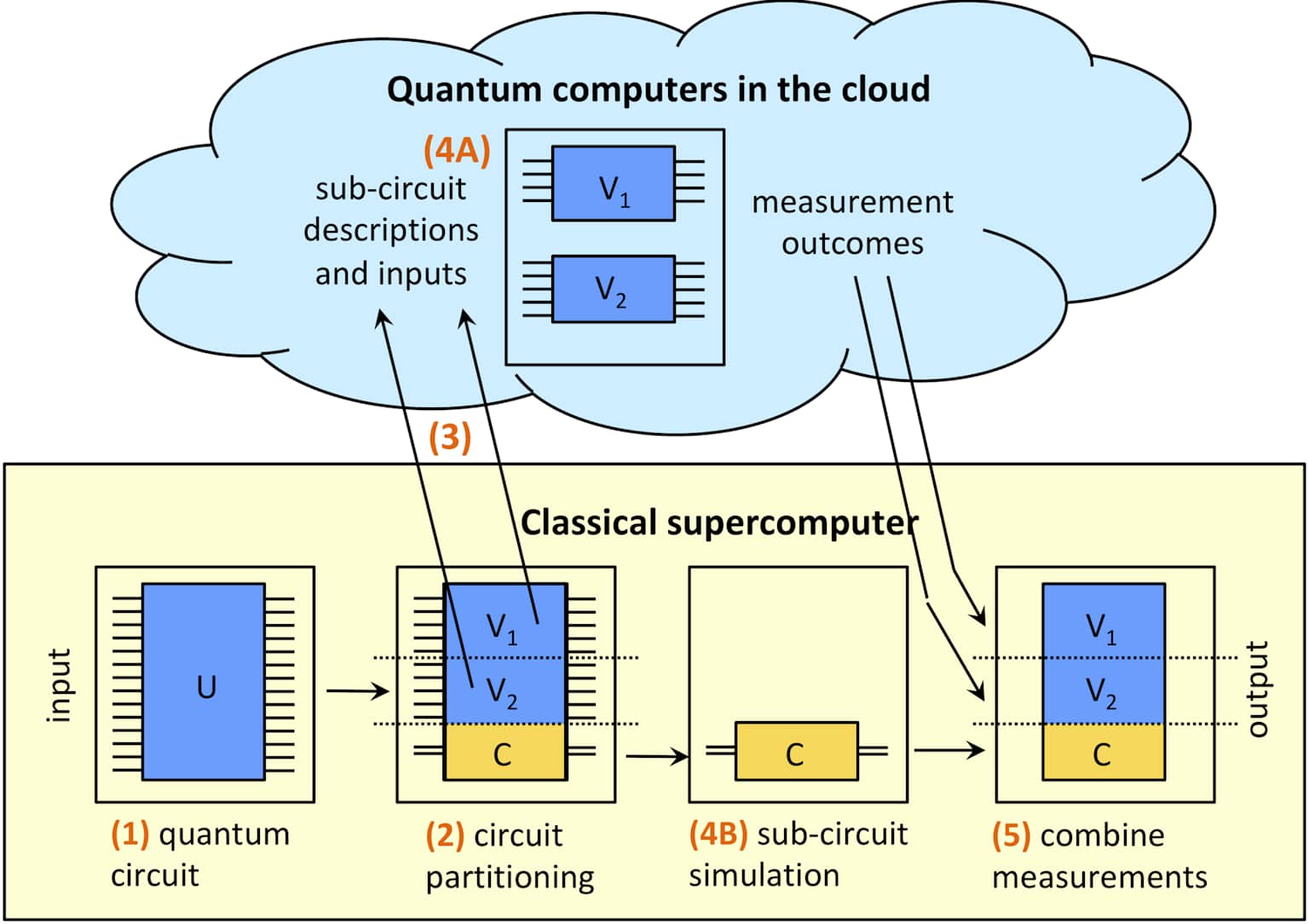
2. Hybrid quantum–classical data workflows
These projects combine normal computers and small quantum processors in one pipeline. Classical code does most of the work, while selected steps are sent to a quantum circuit. The focus is on building clear, reliable workflows that can be tested and repeated.
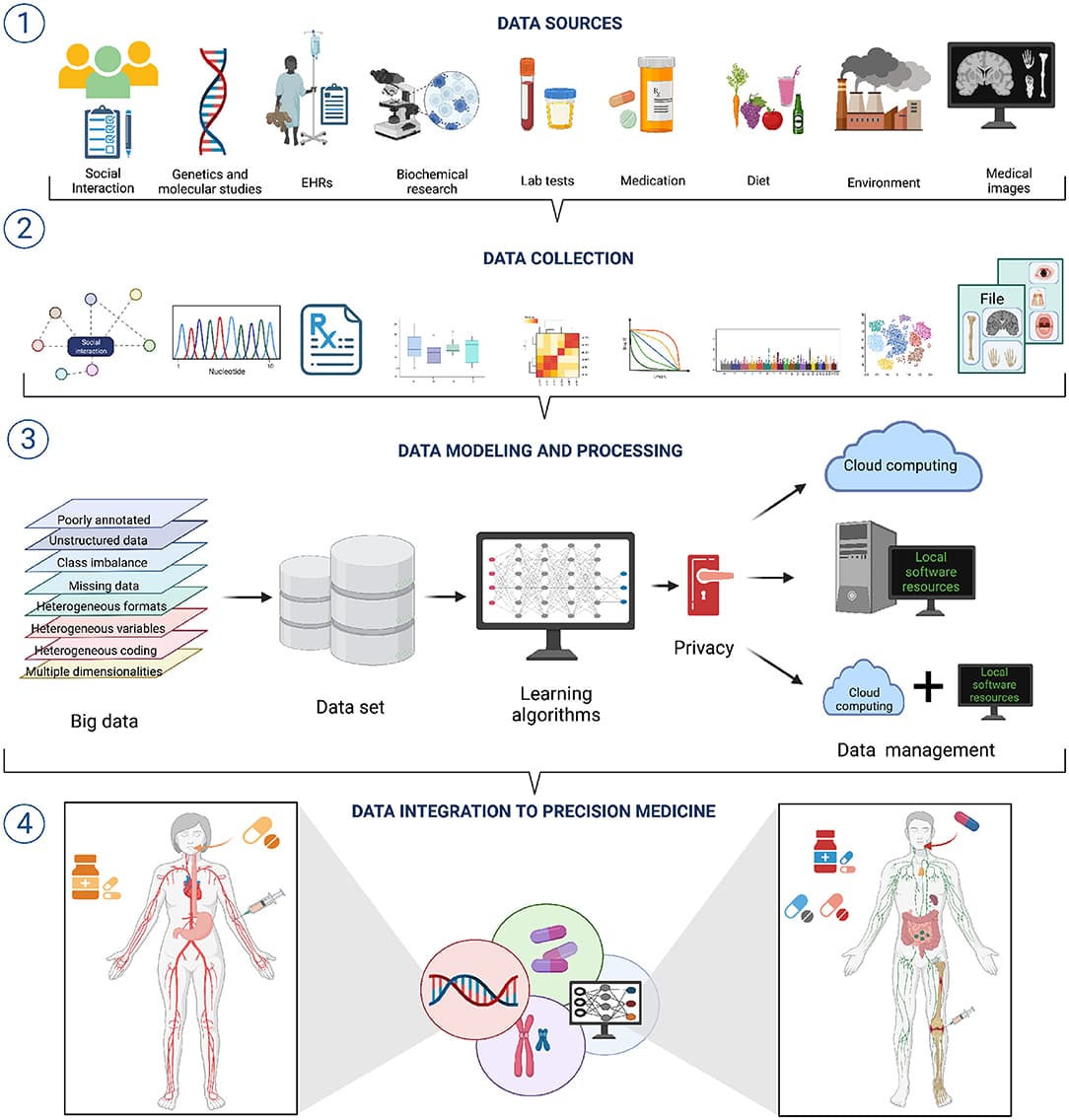
3. Applications in physics and health
Here the methods are tried on real problems inspired by particle‑physics experiments and biomedical data. Examples include classifying collision events or recognizing patterns in health‑related measurements, with an emphasis on results that are easy to interpret.
Quantum computing and machine learning reading
The following books and articles form the starting point for the quantum computing for machine learning project.
Foundations of quantum computing
- Lipton, R. J., & Regan, K. W. (2021). Introduction to quantum algorithms via linear algebra (2nd ed.). MIT Press.
- Yanofsky, N. S., & Mannucci, M. A. (2008). Quantum computing for computer scientists. Cambridge University Press.
Quantum machine learning and applications
- Wittek, P. (2014). Quantum machine learning: What quantum computing means to data mining. Academic Press.
- Kuppusamy, P., et al. (2022). Quantum computing and quantum machine learning classification – A survey.
- Mensa, S., et al. (2023). Quantum machine learning framework for virtual screening in drug discovery.
Research Tools and Beginners Guide
This section collects short guides that support students and collaborators.
- Windows Command Prompt Guide – introduction to directory navigation, file management, Python environments, and basic networking on Windows. Open guide
- Minimal QML Windows Setup – concise guide for installing Miniconda, and running your first Qiskit. Open guide
- WSL2 Ubuntu Setup – beginner‑friendly WSL2 Ubuntu install on Windows 11 Open guide
- Organizing Research Papers Efficiently – step‑by‑step system for folders, file naming, and reference managers. Read article
- Quantum machine learning fundamentals – Quantum machine learning with pennylane. Read article
- Codebook – Learn quantum computing with pennylane - the leading tool for programming quantum computers. Read article
- Minimal Windows setup - Qiskit on Windows – Quick Step-by-Step Guide - Installing the Latest Version of Qiskit. Read article
- Hands-On Quantum Machine Learning – Beginner to Advanced Step-by-Step Guide. Read article
Academic and research experience
Graduate Researcher – University of Saskatchewan
Division of Biomedical Engineering, Saskatoon, Sk, Canada · 2025 – Present
- Graduate research on quantum computing methods for machine learning and data analysis.
- Development and evaluation of hybrid quantum–classical workflows for scientific applications.
- Collaboration with faculty and students on projects at the interface of engineering, physics, and computing.
Teaching and Research Assistant – University of Regina
Department of Physics, Regina, Sk, Canada · 2020 – 2025
- Data analysis for physics research using C++, Python, MATLAB, and ROOT.
- Development of models for predictive analysis in research projects.
- Laboratory instruction and mentoring of undergraduate students.
Teaching Assistant – Concordia University
Department of Physics, Montréal, Qc, Canada · 2018 – 2020
- Laboratory teaching and tutorials in electricity and magnetism.
- Grading and support through review sessions and office hours.
Summer Student Researcher – CERN
European Centre for Nuclear Research (CERN), Geneva, Switzerland · Summer 2017
- Contributions to the ROOT data analysis framework and visualization tools.
- Support for experimental data analysis in international collaborations.
Publications and technical note
Peer‑reviewed journal articles
- M. Frank, E. G. Fuakye, and M. Toharia (2022). “Restricting the parameter space of type-II two-Higgs-doublet models with CP violation.” Physical Review D 106(3), 035010. https://doi.org/10.1103/PhysRevD.106.035010
- S. Sharma, G. F. Grinyer, G. C. Ball, J. R. Leslie, C. E. Svensson, F. A. Ali, … E. Gyabeng Fuakye (2022). “High-precision half-life determination of 14O via direct beta counting.” The European Physical Journal A 58, Article 83. https://doi.org/10.1140/epja/s10050-022-00730-w
- J. S. Randhawa, R. Kanungo, J. Refsgaard, P. Mohr, T. Ahn, M. Alcorta, … E. G. Fuakye (2021). “First direct measurement of 59Cu(p,α)56Ni: A step towards constraining the Ni–Cu cycle in the cosmos.” Physical Review C 104, L042801. https://doi.org/10.1103/PhysRevC.104.L042801
- N. K. Syeda, P. Spagnoletti, C. Andreoiu, C. M. Petrache, D. Annen, R. S. Lubna, … E. G. Fuakye (2025). “Investigation of the excited states of 114Sn using the GRIFFIN spectrometer at TRIUMF.” Nuclear Physics A 1059, 123090. https://doi.org/10.1016/j.nuclphysa.2025.123090
Technical note
- E. G. Fuakye (2017). “ROOT Reference Documentation” (CERN-STUDENTS-Note-2017-012). Technical note on automating ROOT class library listings using shell scripting and C++, preserved in the CERN Digital Memory. https://repository.cern/records/75mb9-dg092
Contact
For questions about projects, reading, or possible collaboration, please use the contact details below.
- Email: erf560@usask.ca
- Phone: +1 306 216 7423
- Affiliation: Division of Biomedical Engineering, University of Saskatchewan
- Address: 57 Campus Drive, Saskatoon, SK S7N 5A9, Canada
Get in Touch
Interested in discussing research, collaboration, or opportunities? Fill out the form below and I'll get back to you soon.